When is Chinese New Year 2027?
Chinese New Year 2027 falls on Saturday 6 February 2027, the start of the Year of the Goat. The Lantern Festival, which marks the end of the celebrations, is on 20 February 2027.
Chinese New Year 2027 falls on Saturday 6 February. The holiday itself lasts about a week, but the disruption to UK supply chains runs from December to March. This guide sets out the dates that matter, working back from the holiday to the last safe day to place an order.
Written by Chris · Updated
Every year, the same story repeats in UK warehouses. An order placed in early January looks safe on paper. The supplier confirms it, the deposit goes across, and then the factory goes quiet. Production lines slow in the last weeks of January, workers travel home for the Spring Festival, and the goods that were meant to land in March leave China in late February instead. By the time the container reaches Felixstowe or Liverpool, the spring selling window is half gone.
None of this is a surprise to the factories. It is the largest annual migration on earth, and Chinese manufacturers plan around it. The UK importers who get caught out are usually the ones who count back from the holiday date rather than from the factory's real shutdown date, which arrives one to three weeks earlier.
Quick version: Chinese New Year 2027 is on Saturday 6 February 2027 (Year of the Goat). For goods with a 30 to 45 day production time, confirm purchase orders by 30 November 2026. Aim for sea freight to leave China by about 9 January 2027. Expect factories to wind down from mid-January and to be back at full capacity only in March.
The festival date is fixed by the lunar calendar: 6 February 2027. China's State Council published the official 2027 holiday schedule on 5 November 2026: the Spring Festival public holiday runs for nine days, from Friday 5 February (New Year's Eve) to Saturday 13 February 2027. Two Sundays, 31 January and 14 February, are make-up working days, so some offices will answer messages on those dates even though production lines are quiet.
Nine days is one day longer than the usual eight-day break, and it starts on New Year's Eve rather than the day after, which is one more reason to expect production to stop earlier than in a normal year.
Factory closures are a different matter. Most manufacturers stop taking new production one to two weeks before the festival, and many production workers leave earlier still, because train and bus tickets home sell out. For 2027, UK buyers should plan on production effectively stopping around 23 to 30 January, with offices and sales teams sometimes staying on a few days longer to answer messages and issue paperwork.
Supplier quotes rarely mention any of this. The single most useful step is to ask every supplier for its own closure and reopening dates in writing, before any order is confirmed.
The dates below work backwards from 6 February 2027. They are planning estimates for typical goods leaving the Shanghai, Ningbo and Shenzhen regions, and each supplier's written dates take priority over them.
| Date | What happens in China | What UK importers should do |
|---|---|---|
| By 30 November 2026 | Factories fill their pre-holiday production schedules | Confirm purchase orders and pay deposits for goods with 30 to 45 day production times |
| Early December 2026 | Raw material orders lock in; sample approvals close | Approve final samples and packaging artwork; book pre-shipment inspection slots |
| Mid December 2026 to early January 2027 | Export demand peaks; container space tightens and rates rise | Book sea freight three to four weeks ahead of the ready date |
| About 9 January 2027 | Last comfortable sea departures before ports and trucking slow | Target date for sea freight to leave China |
| Mid to late January 2027 | Production winds down; workers travel home | Last realistic window for air freight and courier bookings |
| 5 to 13 February 2027 | Official nine-day public holiday (New Year's Day is 6 February) | No production, little communication |
| 14 February 2027 | Make-up working day; offices partly reopen | Chase restart dates and revised ready dates |
| About 20 February 2027 | Lantern Festival; many factories restart after this | Confirm restart dates and revised ready dates |
| March 2027 | Capacity returns; new staff are trained | Inspect early post-holiday production closely |
| April 2027 | First post-holiday sea shipments reach UK ports | Plan stock for goods that missed the January departures |
Work the dates backwards. A product with a 35 day production time, ordered on 30 November, is ready around 4 January. It then needs a pre-shipment inspection, export paperwork and a container booking, which brings departure to about 9 January. From there, sea freight to the UK takes five to eight weeks door to door, so the goods arrive in the second half of February or early March. That is the last order date that keeps spring stock on a normal timetable.
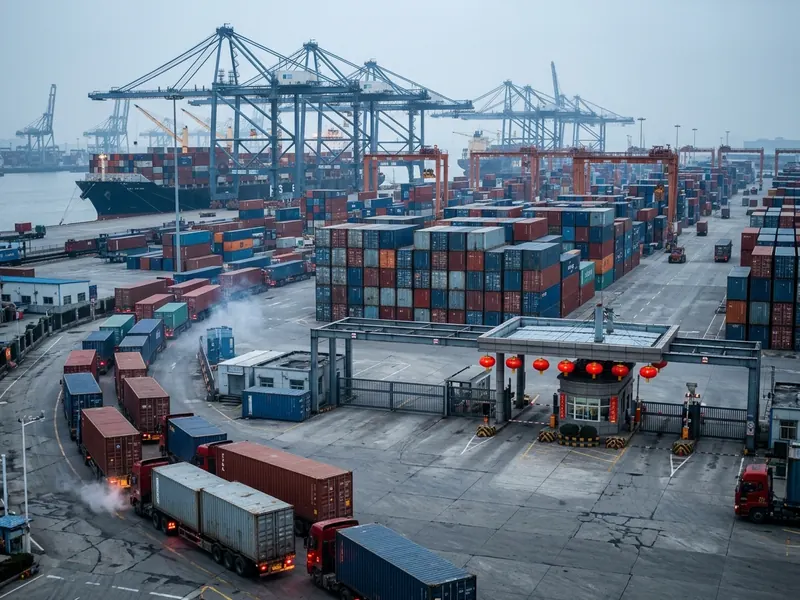
An order confirmed in mid-December follows a different path. Production runs into the January wind-down, the goods often miss the last comfortable sailings, and they either fly at a premium or wait until the factory restarts. For many products, that pushes UK arrival into April. The first-time import walkthrough shows how production, inspection and freight stack up on an ordinary order.
An order confirmed in December is not a lost cause, but it needs a different plan. Four options usually help, and they can be combined.
Factories usually reopen in stages after the Lantern Festival, which falls on 20 February 2027. Offices come back first; production lines follow as workers return. Some workers do not return at all, because the new year is also when many change jobs, so factories spend the first weeks recruiting and training. Full output often returns only in March.
That restart period carries its own risks. Orders placed in January are queued behind those held over from before the holiday, raw material prices are sometimes revised upwards, and newly trained staff make more mistakes. Ready dates promised for late February often slip to mid-March.
Sea freight is the cheapest route but needs the earliest deadline. Container space from China to the UK tightens from mid-December as every exporter tries to ship before the holiday, and rates usually rise with it. LCL shipments need extra time for consolidation, so they should be ready a week earlier than full containers. The LCL vs FCL guide explains the difference.
Air freight remains possible until the factories stop, but air cargo space is also in demand before the holiday, and rates rise. It suits urgent or high-value stock rather than whole orders. The air vs sea freight guide compares the costs, and China to UK shipping covers sea transit times.
The weeks before the holiday are when factories are most tempted to rush. Workers want to finish and go home, managers want orders closed before the year ends, and shortcuts become more likely. Four steps reduce the risk.
The supplier verification checklist covers the checks that should be in place before any deposit is paid.
Disclaimer: the Chinese New Year date is fixed by the lunar calendar. The official 2027 public holiday (5 to 13 February, with make-up working days on 31 January and 14 February) was confirmed by China's State Council on 5 November 2026; this guide was last reviewed on 23 November 2026. Individual factory dates still vary. Treat the calendar above as a planning guide and confirm dates with each supplier.
Common questions
Chinese New Year 2027 falls on Saturday 6 February 2027, the start of the Year of the Goat. The Lantern Festival, which marks the end of the celebrations, is on 20 February 2027.
The official 2027 public holiday lasts nine days, from 5 to 13 February, but production usually stops one to two weeks before the festival and restarts in stages after the Lantern Festival. In practice, many factories run at reduced capacity for four to six weeks, with full output returning in March.
For goods with a 30 to 45 day production time, purchase orders and deposits should be confirmed by about 30 November 2026, so that goods can be inspected and leave China by sea around 9 January 2027.
For sea freight, aim for departure by about 9 January 2027, because container space tightens and trucking slows in the following weeks. Air freight is possible until factories stop in late January, at higher rates.
Often not. Orders confirmed after mid-December frequently miss the last comfortable sailings and are finished after the factory restarts, which can push UK arrival by sea into April.
Plan before the shutdown
Send the supplier quote, ready date and UK delivery target. Bridgeway can check whether the order still fits before Chinese New Year and plan the freight around it.