Is there a minimum shipment size for LCL?
Most consolidators bill a minimum of 1 CBM even for smaller loads. Below roughly 0.5 CBM or 100kg, express courier is usually faster and barely more expensive once LCL destination fees are counted.
Share a container or book the whole box? The wrong answer wastes money or adds risk. This guide gives the crossover maths, the hidden fees and the situations where each option wins.
Every importer moving beyond courier parcels meets the same fork in the road: share a container or book a whole one. LCL (Less than Container Load) and FCL (Full Container Load) move the same goods on the same vessels, but they are priced, handled and delayed in completely different ways. Choosing the wrong one either wastes money on empty container space or exposes a growing order to unnecessary handling.
Quick version: below roughly 12 CBM, LCL usually wins on cost. Above roughly 15 CBM, a 20ft container (FCL) is often cheaper and safer. In between, the decision depends on fragility, deadline and the destination warehouse.
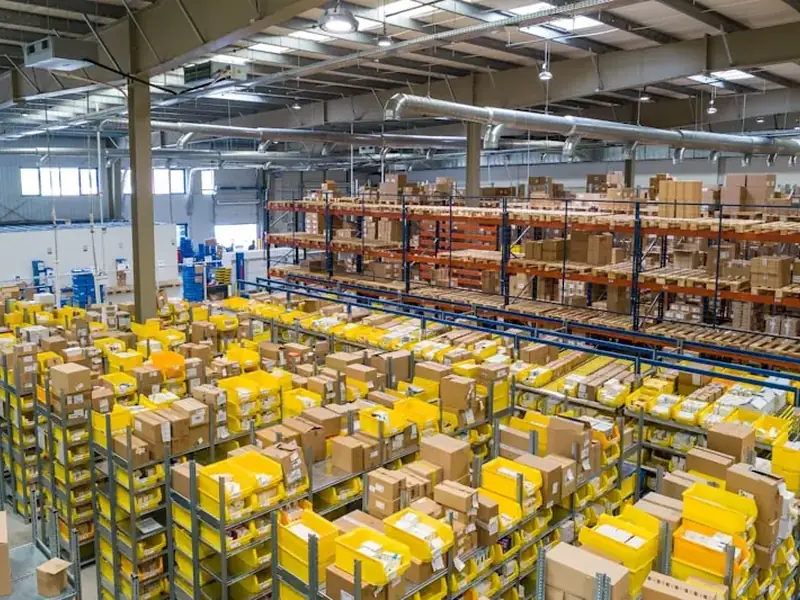
LCL means the goods share a container with other importers' cargo. A consolidator fills the box in China, and a deconsolidation warehouse unpacks it in the UK. Charges are per cubic metre (CBM), with minimums — typically around 1 CBM. FCL means the container is sealed at the factory and opened at the UK destination: a 20ft box holds about 26–28 usable CBM, a 40ft about 55–60 CBM, priced as a flat rate regardless of how full it is.
| LCL | FCL (20ft) | |
|---|---|---|
| Pricing basis | Per CBM + fixed fees | Flat rate per container |
| Sweet spot | 1–12 CBM | 15+ CBM |
| Handling | Packed and unpacked twice by third parties | Sealed factory to door |
| Damage/loss risk | Higher — shared box, more touches | Lower — untouched in transit |
| Speed | Slower — waits for consolidation both ends | Faster — typically 5–10 days quicker door to door |
| Destination fees | Deconsolidation charges (often underestimated) | Haulage + container return deadlines |
The trap with LCL sits in the destination charges. The ocean leg can look cheap, but UK deconsolidation, handling and delivery fees are billed per shipment and per CBM — on a 3 CBM order they can rival the freight itself. Always compare door-to-door totals, never port-to-port rates. This is exactly the comparison built into Bridgeway's China to UK shipping service.
Volume per carton = length × width × height (in metres). Multiply by carton count for total CBM. A typical order of 500 cartons at 60 × 40 × 40cm is 500 × 0.096 = 48 CBM — comfortably a 40ft container. The same product at 100 cartons is 9.6 CBM — LCL territory. Suppliers state carton dimensions on the quotation or packing list; if they will not, that is a negotiation red flag worth resolving before booking anything.
Rule of thumb: get both quotes from ~10 CBM upwards. The comparison costs nothing and the answer changes with every freight-rate cycle. Duty and VAT are identical either way — they follow the goods, not the container (see the duty & VAT guide).
Common questions
Most consolidators bill a minimum of 1 CBM even for smaller loads. Below roughly 0.5 CBM or 100kg, express courier is usually faster and barely more expensive once LCL destination fees are counted.
Port-to-port transit is the same vessel, but LCL waits for consolidation in China and deconsolidation in the UK. Door to door, expect LCL to take one to two weeks longer than FCL on the same route.
Yes — the rate is flat whether it carries 10 CBM or 28. That is exactly why the crossover exists: from the low teens of CBM, paying for empty space can still beat paying LCL's per-CBM and handling charges.
The receiver does, normally within a free window before the haulier's detention charges start. Warehouses expect a booking; fulfilment centres have strict rules. Delivery planning is part of Bridgeway's final delivery service.
Get a real figure
Send the supplier quote, carton details and destination. Bridgeway will reply with a practical route and cost view.