Why ordinary freight assumptions fail
An e-bike, scooter, power tool or electronic device may look like normal cargo, but its lithium battery changes how the shipment is classified, documented, packed and accepted. The UK Civil Aviation Authority warns that incorrectly packed, labelled or undeclared batteries create a serious aircraft fire risk. A low headline rate is not useful if the carrier rejects the booking.
UN3480 or UN3481?
UN3480 normally covers lithium-ion batteries shipped on their own. UN3481 covers batteries packed with equipment or contained in equipment. That distinction can change the packing instruction, quantity limits, labels, documentation and available air service. Confirm the exact configuration before asking for a route.
The document pack to request
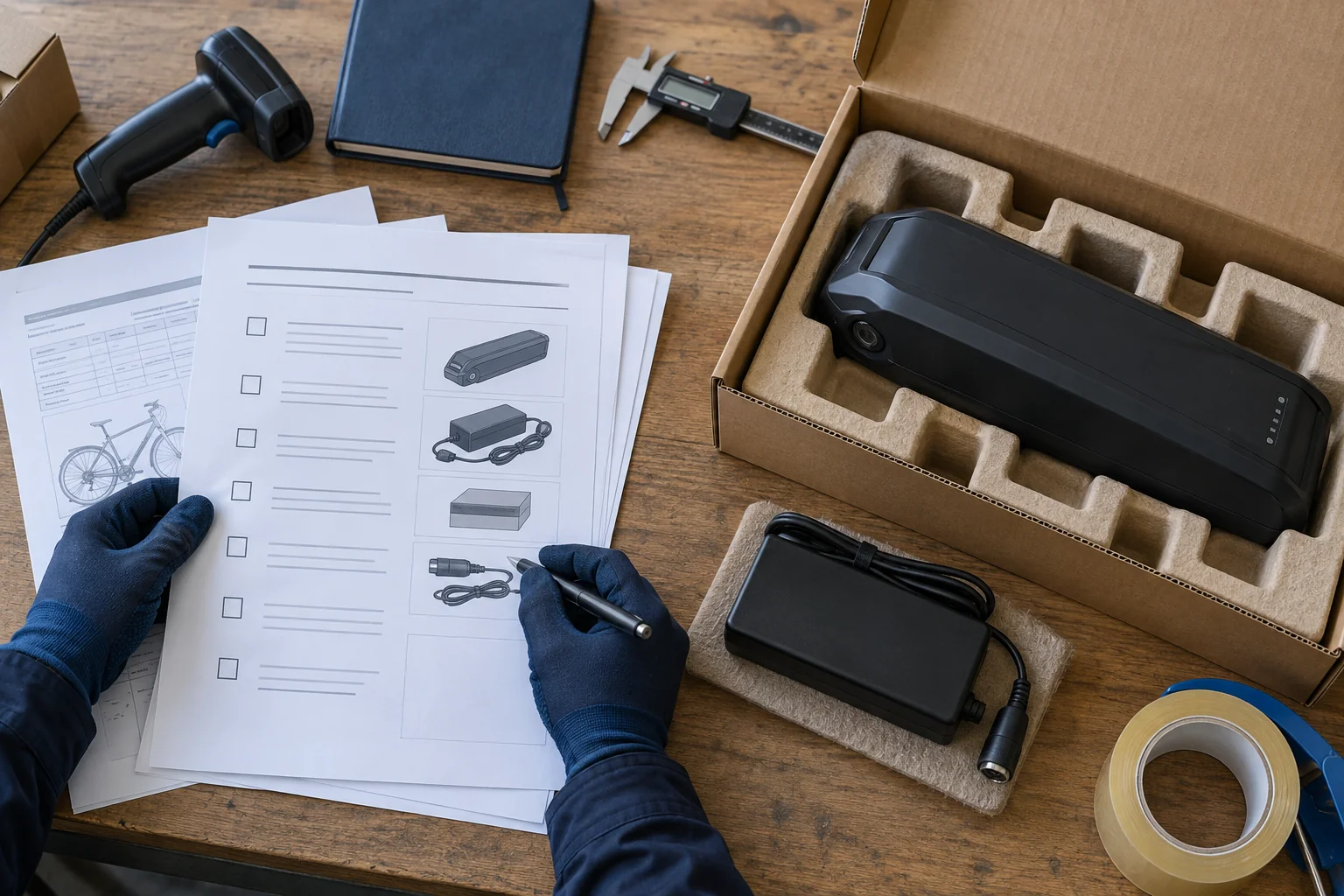
- UN38.3 test summary matching the exact cell or battery type;
- current Safety Data Sheet (SDS), plus specification sheet;
- battery watt-hours, model number, manufacturer and production traceability;
- packing photographs, carton dimensions and battery net weight;
- dangerous-goods declaration or air-waybill wording where required;
- product-safety evidence for the complete product, battery and charger.
Air, sea or courier?
Air can be fast, but airline acceptance, state-of-charge rules and dangerous-goods capacity matter. Sea freight may suit larger commercial volumes, but still needs correct classification, packing, declaration and port acceptance. Courier services apply their own restrictions. The responsible answer is route-specific: obtain acceptance against the actual battery documents and shipment details.
Product safety still sits with the importer
Transport compliance does not prove that a product is safe to sell. UK guidance for e-bike batteries says importers and distributors must ensure products are safe and should obtain evidence covering protection against thermal runaway, compatible chargers, instructions and traceability. A UN38.3 result is transport evidence, not a complete UK product-safety approval.
How Bridgeway can help
Bridgeway can collect supplier documents, identify gaps, confirm packing and shipment data, request route acceptance, compare freight options and connect the booking to customs and final UK delivery. Carrier acceptance and live pricing must be confirmed for each shipment.
Send the battery details before asking for a rate.
Share the product link, battery specification, quantity, cartons and UK postcode.