One number decides the duty rate, the paperwork and whether customs waves the shipment through. This guide shows how the code is built, how to find the right one and what mistakes cost.
Every product that enters the UK travels under a ten-digit number, and that number quietly decides more about an import than the supplier, the freight rate or the exchange rate: the duty percentage, whether anti-dumping charges apply, what documents customs expects, and whether the shipment sails through clearance or sits in an exam queue. Yet most first-time importers let someone else guess it.
The first six digits travel worldwide; the last four are the UK's — and they set the duty rate.
How the number is built
The first six digits come from the World Customs Organization's Harmonized System (HS) — identical in China, the UK and almost everywhere else. The supplier's export paperwork and the UK import declaration should agree on these six. The last four digits are the UK's own subdivisions, and this is where the money lives: two products sharing the first six digits can carry different duty rates in the final four.
Finding the right code
Start at the official source — the UK Integrated Online Tariff is free, current, and legally the one that counts. Search by product description and walk down the tree: chapter → heading → subheading.
Read the section and chapter notes — classification follows legal rules, not intuition. A wooden lamp is not "wooden articles"; lighting has its own chapter. Materials, function and completeness all matter, and the notes settle the arguments.
Treat the supplier's code as a hint — Chinese factories reuse whatever six-digit code cleared their last export, which may be wrong for the product and says nothing about the UK's final four digits.
When genuinely stuck, ask HMRC — an Advance Tariff Ruling is free and legally binding for three years. For a product line worth reordering, it converts a guess into certainty.
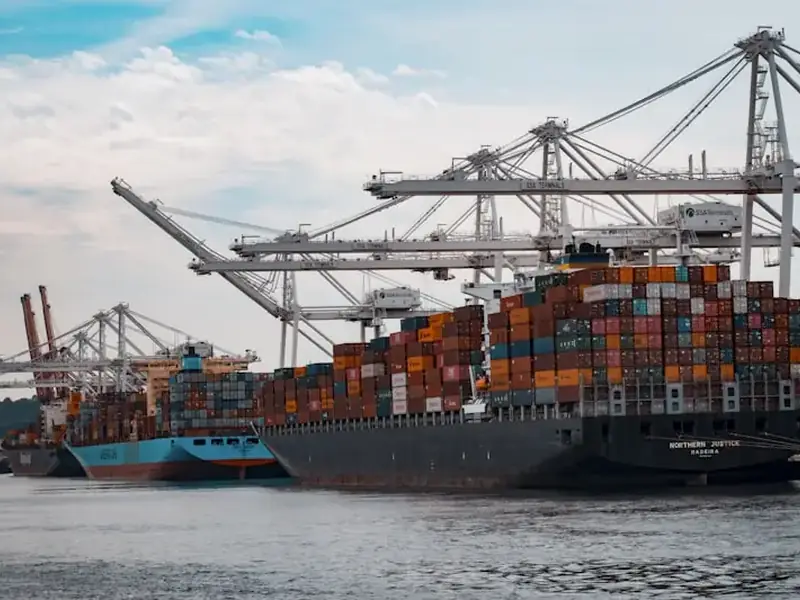
Every container clears customs under the codes on its declaration — and the declarant is responsible, not the agent who typed them.
What the code controls
Consequence
How the code decides it
Duty rate
Each 10-digit line has its own rate — commonly 0% to 12%, higher for textiles and footwear
Anti-dumping duty
Specific codes from China carry additional duties that can exceed 50% (e-bikes, ceramics, some steel and aluminium)
Import VAT base
Duty feeds into the VAT calculation, so a wrong rate compounds (see the duty & VAT guide)
Documentary requirements
Some codes trigger licences, safety certification or additional checks at the border
Clearance friction
Codes that mismatch the goods description invite physical exams and delay
The cost of getting it wrong
Under-declared duty does not disappear — HMRC can reassess up to three years back, with interest, and the legal responsibility sits with the importer, not the freight agent who filed the entry. Over-declaring is the quieter loss: paying 6.5% where the correct line is 2.7% for months before anyone notices. Reclaims are possible but slow. Both problems cost more than the thirty minutes it takes to classify properly the first time, which is why code confirmation is a standard part of Bridgeway's customs clearance support.
Practical habit: classify the product before requesting supplier quotes, not after the goods ship. The duty rate belongs in the landed-cost calculation that decides whether the product is worth importing at all.
Written by Kevin CaoImport Solutions Specialist at Bridgeway Imports, Manchester. Kevin helps UK businesses source, ship and clear goods from China every week.
Common questions
Quick answers on this topic.
Are HS codes the same in China and the UK?
The first six digits are, by international agreement. The remaining digits diverge: China uses its own extensions for export, the UK its own for import. The UK declaration needs the full 10-digit UK code, not the supplier's export code.
Who is legally responsible if the code is wrong?
The importer of record. Freight forwarders and brokers file the declaration as agents, but HMRC pursues the importer for underpaid duty, interest and any penalties.
What is an Advance Tariff Ruling?
A free, written HMRC decision on a product's classification, binding for three years. Applications run through GOV.UK and suit products that will be reordered — one ruling removes the ambiguity for every future shipment.
Does one shipment always use one code?
No — a mixed shipment declares each product line under its own code, each with its own duty rate. Packing lists and invoices should be itemised so the declaration can be too.
Get a real figure
Want these numbers checked against a real shipment?
Send the supplier quote, carton details and destination. Bridgeway will reply with a practical route and cost view.